
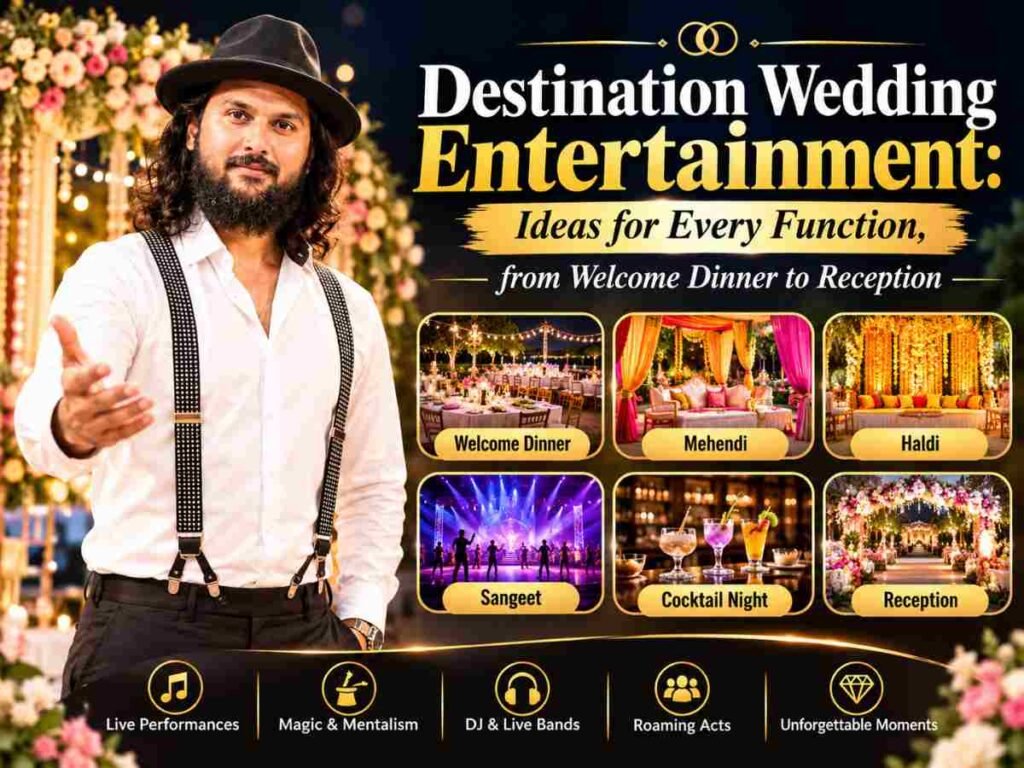
At an Indian destination wedding, guests stay together for two to four days, so entertainment has to be planned function by function, not as one big act. The welcome dinner needs icebreakers that get two families talking; the mehendi and haldi need relaxed, roaming entertainment; the sangeet is where the headline performances go; and the cocktail night and reception need acts that work while guests mingle. The best plans mix one or two headline moments with smaller, interactive acts that fill the gaps between rituals.
This guide works through each function, what suits it, and how to plan entertainment for destinations such as Udaipur, Jaipur, Goa, Jim Corbett and Coorg, or the wedding destinations near Mumbai and Delhi.
Entertainment by function
| Function | Mood | What works | What to avoid |
|---|---|---|---|
| Welcome dinner / lunch | Relaxed, getting to know each other | Live acoustic music, walkaround magic, caricature artists, a local folk performance | Loud headline acts; it’s too early |
| Mehendi | Daytime, casual, long | Dhol, folk singers, roaming performers, games | Anything that needs everyone’s attention for a long time |
| Haldi | Playful, short | Dhol, a fun band, simple games | Elaborate staging |
| Sangeet | The main entertainment night | Family dance performances, a headline singer or band, a short stage act, a DJ | Too many acts; keep the running order tight |
| Cocktail night | Social, mingling | A DJ, a live band, close-up magic, a bartending show | Long stage segments |
| Reception | Formal, then celebratory | Live music while guests greet the couple, walkaround acts, a DJ later | Acts that compete with the stage greeting |
Function by function
Welcome dinner: break the ice
Families often meet properly for the first time here. Choose acts that come to the guests: acoustic musicians, roaming caricature artists or walkaround magic. Many destination weddings now open with relaxed live music to set the tone for the weekend.
Mehendi and haldi: keep it light
These are long, daytime functions where the bride and family are busy. Roaming entertainment (dhol players, folk singers, a magician moving between groups) keeps guests engaged without needing a stage.
Sangeet: the headline night
This is where the family performances, a headline singer or band, and the DJ go. A short, personal act, such as a 20–30 minute stage segment built around the couple’s story, works well between family performances. The common mistake is too many acts; a sangeet with a tight running order feels bigger than one that drags past midnight.
Cocktail night: let people mingle
A DJ or live band sets the mood; close-up acts (magic, bartending shows, live sketching) give guests something to gather around without stopping conversation.
Reception: support the stage greeting
At most Indian receptions guests queue to greet the couple. Live music and walkaround entertainers make the wait part of the evening.
Local talent vs flying acts in
| Local performers | Acts you fly in | |
|---|---|---|
| Cost | Lower: no travel or stay | Higher: travel, stay and per diems |
| Authenticity | Strong for regional folk acts (e.g. Rajasthani folk at Udaipur or Jaipur weddings) | Strong for headline names and specialist acts |
| Best for | Welcome dinners, mehendi, cultural moments | Sangeet headliners, personalised acts |
| Tip | Ask your planner for performers near the venue | Book them for two functions on one trip to spread travel costs |
Planning by destination
- Udaipur and Jaipur: palace and heritage venues suit Rajasthani folk acts at the welcome dinner and mehendi, with a headline act at the sangeet. Outdoor courtyards need sound and lighting planned for evenings.
- Goa: beach and poolside settings favour live bands, DJs and close-up acts. Plan for sea breeze, and keep an indoor backup during the monsoon.
- Jim Corbett: forest resorts suit bonfire evenings, acoustic sets and intimate acts. Winter nights are cold, so keep long outdoor segments short.
- Coorg: estate weddings are intimate; acoustic music and close-up acts fit better than a large stage production. Avoid outdoor plans during the June–September monsoon.
- Near Mumbai and Delhi: Lonavala, Karjat, Alibaug and the resorts around Delhi NCR host shorter destination weddings, often over one or two days, so fewer, stronger acts work best.
Planning checklist
- List every function and decide the mood for each
- Choose one headline act (usually for the sangeet)
- Add interactive, roaming acts for the welcome dinner, mehendi and reception
- Check the venue’s sound limits and end times
- Plan stage, sound and lighting for outdoor evenings
- Ask flown-in acts to cover two functions on one trip
- Share a single running order with every performer and your planner
Where magic fits
Magic is one of the few acts that works at almost every function: walkaround magic at the welcome dinner and reception, roaming close-up at the mehendi, and a short, personalised stage segment at the sangeet. Illusionist Tyson performs at destination weddings across India. See wedding magician in Udaipur, magician in Jaipur, magician in Goa and wedding and sangeet shows.
FAQs
How much entertainment does a destination wedding need?
Usually one headline act (often at the sangeet) plus smaller interactive acts for the welcome dinner, mehendi and reception. More acts don’t make the wedding feel bigger; a tight running order does.
Should we hire local performers or fly them in?
Use local performers for regional and cultural acts, and fly in only the headline or specialist acts. Booking a flown-in act for two functions spreads the travel cost.
What entertainment works for guests who don’t know each other?
Interactive acts that come to the guests, such as walkaround magic, caricature artists or roaming musicians, are the best icebreakers.
How early should we book wedding entertainment?
For October–February weddings at popular destinations, book headline acts three to six months ahead and confirm smaller acts at least six weeks ahead.